Reimagining Care for Dermatology Through PRISM.
When guideline-based care reaches its limits, PRISM helps reveal the deeper systems driving disease progression — giving clinicians a new path to stabilizing complex cases.
From Guidelines to Systems Thinking: Why PRISM Changes the Clinical Outcome
Standard Dermatology Care Provides Relief — But Only Up to a Point
Guideline-based dermatology management focuses on topical therapies, systemic immunosuppressants, biologics, phototherapy, and wound-directed care. For many patients, these pathways deliver substantial improvement — but a significant subset enters a refractory stage where inflammation, immune dysfunction, and systemic contributors drive continued skin deterioration despite optimal therapy.
In severe, treatment-resistant dermatology, deeper systemic drivers often remain unaddressed:
- Immune–metabolic loops sustaining chronic inflammation
- Barrier–microbiome dysfunction amplifying flare cycles
- Neuro-immune dysregulation worsening itch, pain & vasodilation
- Microvascular impairment contributing to non-healing ulcers
- Autonomic imbalance affecting flare severity and stress-induced relapse
- Phenotype patterns influencing treatment response
These interconnected drivers fall outside the scope of standard ICMR/NICE dermatology pathways, which remain largely inflammation- or symptom-centric.
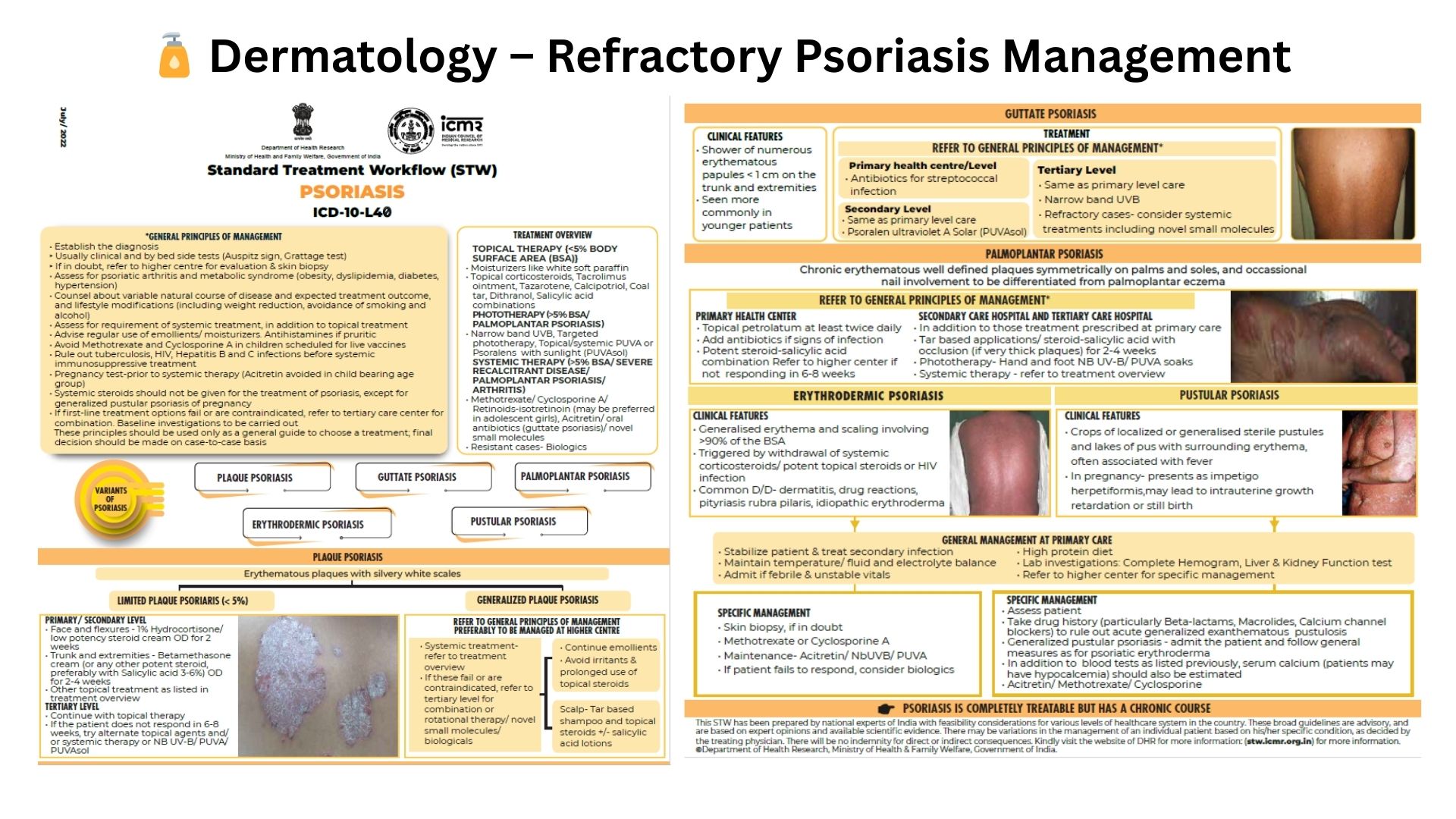
Where Traditional Approaches Fall Short
Severe disease refractory to biologics
Psoriasis, eczema, and other chronic conditions that fail multiple biologics or immunosuppressants require a deeper systems explanation beyond immune blockade.
Chronic non-healing autoimmune / vasculitic ulcers
When microvascular failure, immune dysfunction, and tissue breakdown continue despite guideline-based wound care and systemic therapy.
Multi-system complications of dermatologic disease
Scleroderma and autoimmune skin disorders often involve lungs, vasculature, gut, and autonomic function — but dermatology guidelines treat skin manifestation alone.
PRISM: A Systems-Driven Framework for Refractory Dermatology
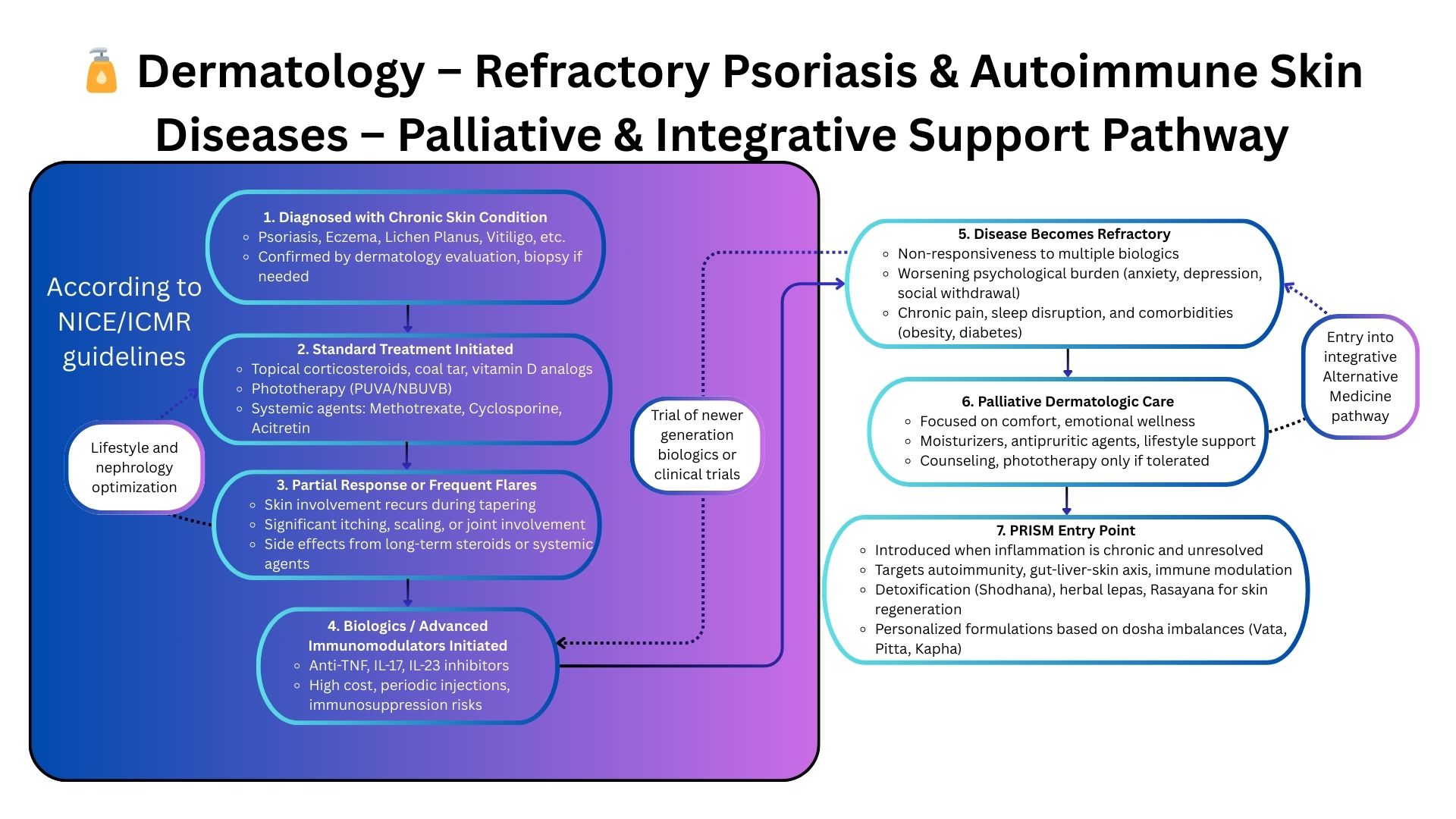
Why PRISM Works When Dermatology Guidelines Stop
PRISM maps the systemic drivers that continue fueling severe dermatologic disease:
- Immune–metabolic dysregulation sustaining chronic inflammation
- Microbiome–skin axis disruption increasing flare frequency
- Neuro-immune drivers behind chronic itching, redness, and pain
- Microvascular dysfunction delaying ulcer healing
- Autonomic imbalance affecting thermal, sweat, & stress responses
- Phenotype mapping to determine which systems to prioritize first
This enables clinicians to stabilize refractory dermatology cases, reduce flare cycles, accelerate ulcer healing, and improve quality of life even when standard escalation (biologics, steroids, immunosuppressants) has reached its limit.