When Oncology Guidelines Reach Their Therapeutic Ceiling, PRISM Extends What’s Possible in Advanced Cancer
Aligned with NCCN and global oncology standards—PRISM is relevant only when standard therapies no longer offer escalation.
See how PRISM supports care in advanced Cancer Care.
➲ NCCN and specialty-body guidelines are the foundation of all cancer care.
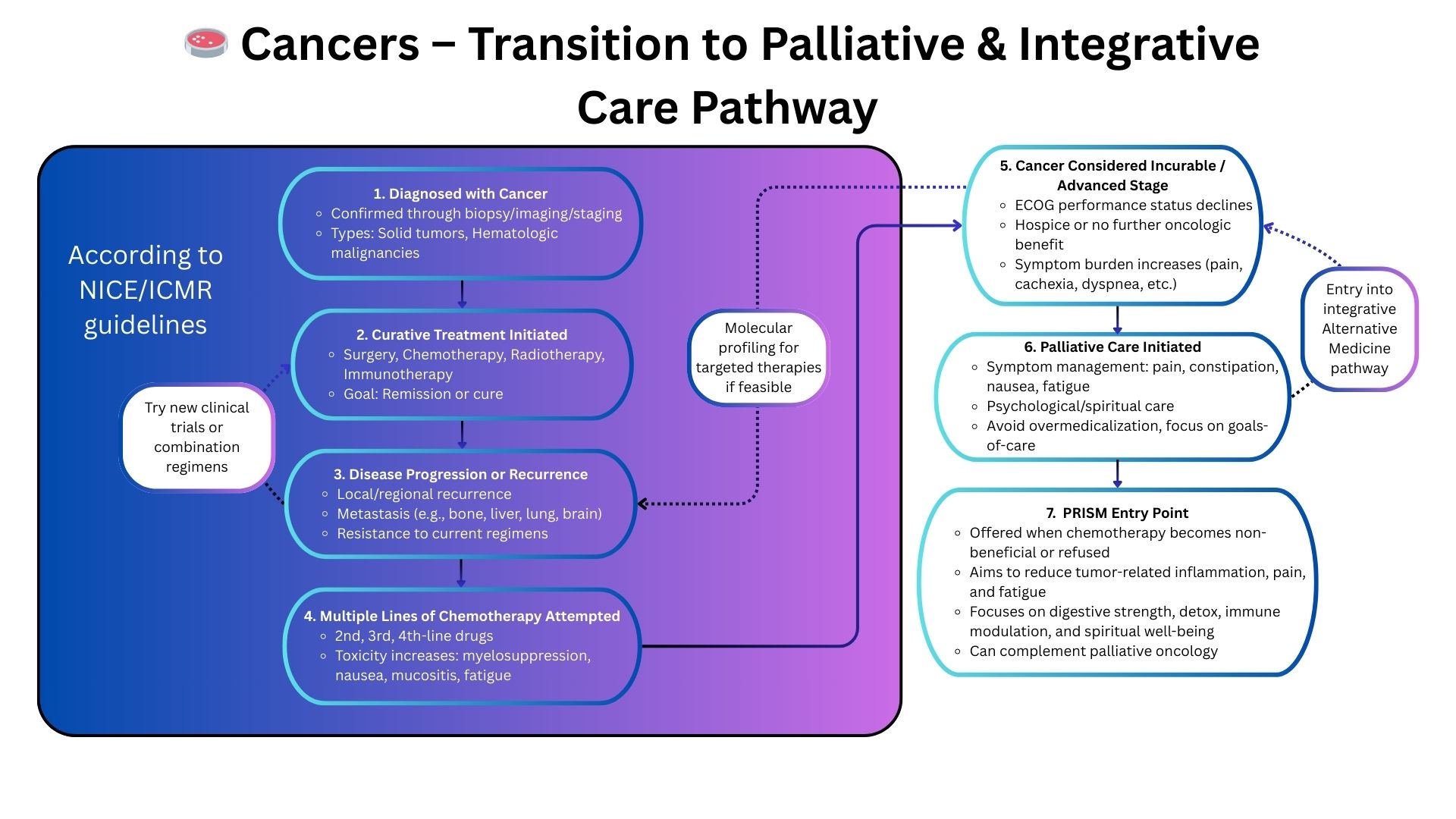
➲ PRISM does not replace them. It becomes significant only when disease progresses despite lines of therapy, or when toxicity, frailty, or end-stage decline limits further escalation.
➲ At the moment when clinicians begin discussing palliative oncology or supportive-only trajectories, PRISM adds a systems-medicine layer that identifies hidden dysfunctions, improves resilience, and restores meaningful function—never contradicting oncology guidelines, but extending dignity and capability where options narrow.
From Guidelines to Systems Thinking: Why PRISM Changes the Clinical Outcome
Standard Oncology Care Is Effective — Until Disease Becomes Systemic
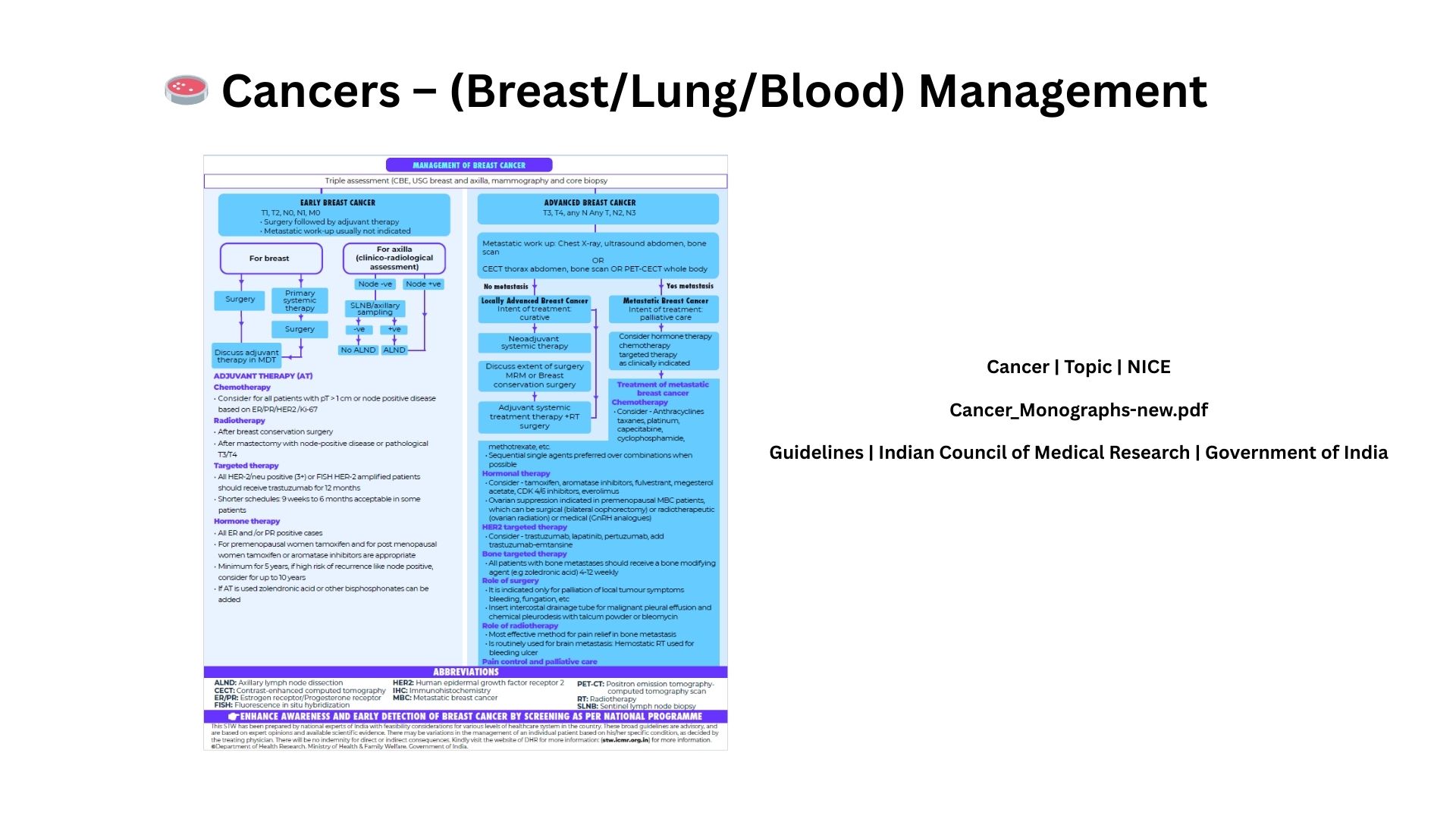
Modern oncology guidelines structure care through tumor staging, molecular profiling, chemotherapy sequencing, immunotherapy protocols, radiation strategies, and surgical eligibility. These approaches are powerful in early and intermediate disease stages.
However, in advanced or refractory cancers — metastatic progression despite therapy, hematologic malignancies beyond salvage, severe cachexia, or declining ECOG status — disease behavior is no longer driven by tumor biology alone.
- Chronic inflammatory signaling sustaining tumor microenvironment
- Immune exhaustion and dysregulation limiting response durability
- Metabolic and mitochondrial collapse reducing systemic resilience
- Gut–immune disruption worsening inflammation and nutrition
- Autonomic imbalance driving fatigue, sleep loss, and appetite failure
- Phenotype-specific decline patterns affecting survival trajectory
Where Traditional Oncology Pathways Fall Short
Progression despite exhausted treatment lines
When chemotherapy, targeted therapy, and immunotherapy options are exhausted, guidelines default to supportive or palliative care without systemic stabilization.
Cancer-cachexia and metabolic collapse
Severe weight loss, muscle wasting, fatigue, and anorexia are driven by complex systemic loops that medications alone cannot reverse.
Poor performance status (ECOG ≥ 3)
Patients cannot tolerate escalation yet continue to decline due to unaddressed immune, metabolic, and autonomic failure.
PRISM: A Systems-Biology Framework for Advanced Oncology
Why PRISM Works When Oncology Guidelines End
PRISM identifies and modulates the system-level drivers of cancer decline:
- Immune–metabolic loops sustaining inflammation
- Mitochondrial depletion limiting treatment tolerance
- Gut–immune signaling affecting systemic resilience
- Autonomic imbalance influencing sleep, appetite, and fatigue
- Phenotype mapping to predict decline patterns
- Digital markers revealing trajectory shifts early
This allows clinicians to stabilize physiology, reduce symptom burden, and slow decline velocity — even when curative options are no longer feasible.