
When Guideline-Directed Care Reaches Its Limits, PRISM Extends What’s Possible
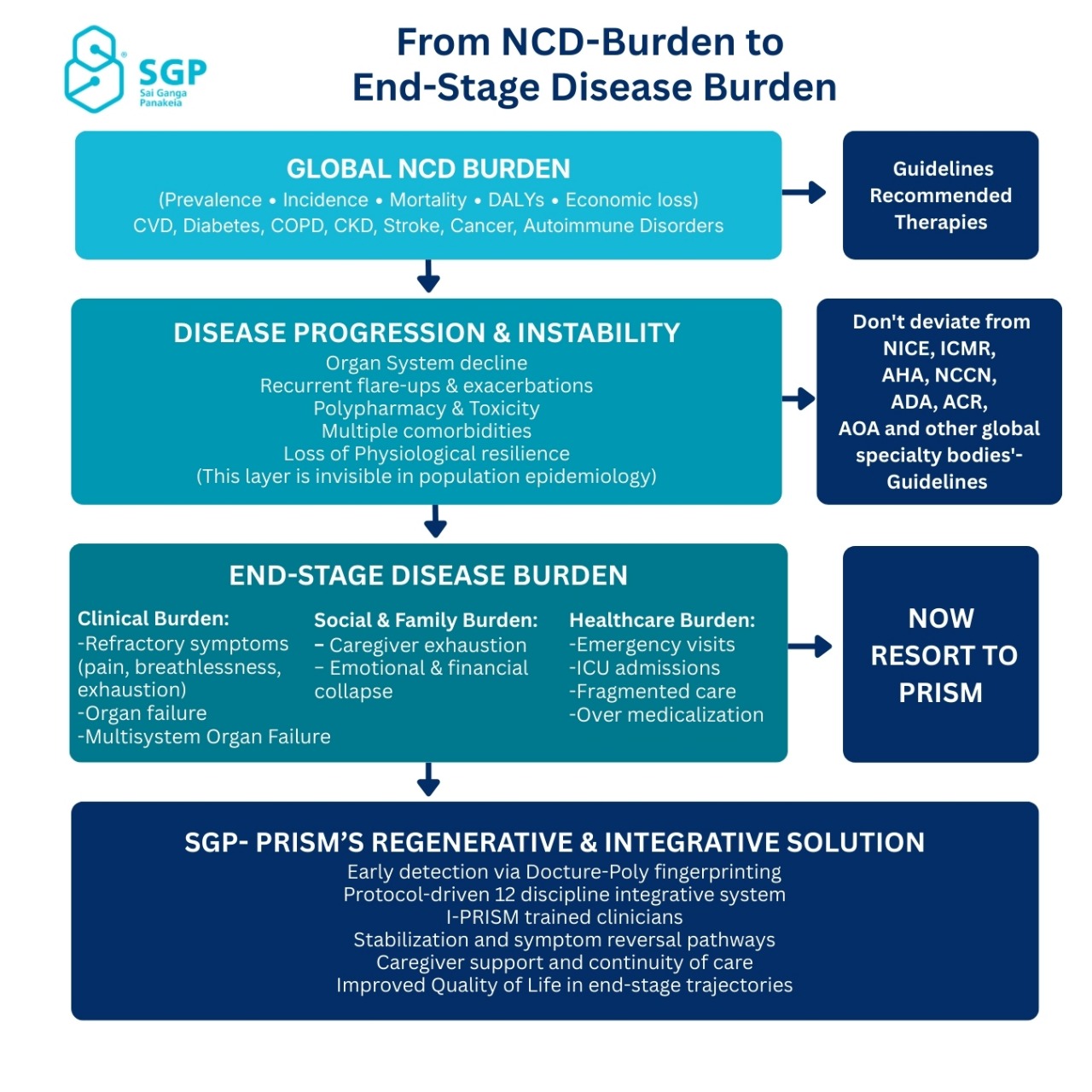
Grounded in the sacrosanct standards set by NICE, ICMR, AHA, NCCN, ADA, ACR, AOA and other global specialty bodies—PRISM activates only when traditional pathways offer no further therapeutic escalation.
Give your patients a chance beyond the therapeutic ceiling—discover PRISM.
➲ Clinical guidelines are the backbone of responsible medical care, representing the highest level of evidence-based practice.
➲ PRISM does not replace these standards—it respects them, aligns with them, and becomes relevant only when a patient is functionally declining, refractory to recommended therapies, or nearing end-stage disease where established protocols have exhausted their intended scope.
➲ At the point where clinicians begin considering hospice, palliation, or supportive-only care, PRISM introduces a systems-medicine layer that uncovers hidden drivers, stabilizes deterioration, and meaningfully restores function. Not as an alternative to guidelines, but as a partner when they can no longer advance the therapeutic frontier.
When Should I Consider the PRISM Framework for My Patients?
Choose PRISM when you’re caring for patients who require deeper systems-level insight beyond conventional guidelines.
Your patient’s disease is progressing despite guideline-based management.
➤ When symptoms worsen even after following established protocols.
➤ When labs, imaging, or biomarkers show continued deterioration.
➤ When drugs lose effectiveness or tolerance becomes an issue.
➤ When you’re running out of escalation options (biologics, immunotherapy, chemotherapy, etc.)
PRISM helps uncover hidden systemic drivers contributing to disease progression.
Each specialty sees only a piece of the larger clinical picture.
➤ When different specialists give contradicting explanations of the patient’s condition.
➤ When symptoms span multiple systems (gut, neuro, endocrine, immune, inflammatory).
➤ When the patient is stuck in a loop of referrals without clarity.
➤ When investigations explain only fragments, not the whole.
PRISM connects system-level patterns into one coherent, interpretable structure.
When you want the patient to live longer and better — and options are limited.
➤ Patients transitioning into advanced stages (oncology, autoimmune, metabolic failure).
➤ When prognosis becomes uncertain or survival timelines are unclear and you are considering Palliation or Hospice.
➤ When conventional treatment is maximized but quality of life is declining.
➤ When you want to shift toward restorative and supportive systemic interventions.
PRISM supports restorative, dignity-focused, systemic care for advanced or high-risk conditions.
Why Clinicians Use the PRISM Approach
Whole-Person Clarity
See the whole patient, not just the lab report.
Symptoms, labs, lifestyle, VPK 42 Fingerprint (AKA Metabolic Fingerprint) and subtle patterns integrated into one meaningful snapshot.
Stratify Complex Cases in an Integrative setup
Distinguish inflammatory, neuro-autonomic, metabolic, gut-immune patterns applying Doshic Influences at a level of Molecular and Systems Biology.
Identify Hidden Drivers
Lifestyle, environment, stress, sleep, dysbiosis, subtle constitutional patterns applying Translational Ayuveda.
Support Your Decision-Making in End-Stage.
PRISM enhances clinical guidelines—it doesn’t replace them.
Evidence-Driven Care Across Major Specialties











How PRISM Fits Into Your Clinical Workflow
An intuitive, step-by-step journey that enhances clinical decision-making while keeping you as the primary clinician.
Clinical Onboarding
You remain the primary clinician throughout the journey.
PRISM helps identify the right patient pathway — autoimmune, metabolic, gut-immune, neuro-immune — ensuring the right clinical lens is applied from the beginning.