
Vitiligo

Overview
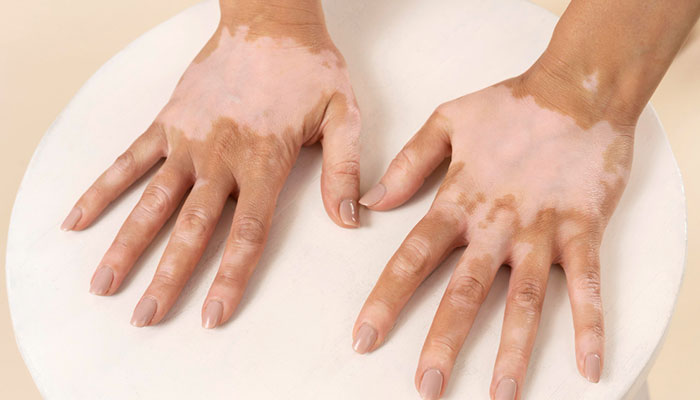
Vitiligo is an autoimmune skin condition characterized by loss of skin pigmentation. It occurs when melanocytes, the cells responsible for producing melanin, are destroyed. This leads to the appearance of white patches on different parts of the body. The condition can affect the skin, hair, and mucous membranes. Vitiligo may develop gradually or suddenly. It can occur at any age and affects both men and women. While it does not cause physical discomfort, it may have significant psychological and emotional impact. The pattern and extent of pigmentation loss vary among individuals. Some cases remain localized, while others may spread over time. Early evaluation helps in monitoring progression.
What Happens During Allergic Rhinitis?
In vitiligo, the immune system attacks melanocytes. As these pigment-producing cells are destroyed, affected areas lose their natural color. The skin in these regions becomes white or depigmented. Hair growing in these patches may also turn white. The condition may progress slowly or stabilize after initial spread.
Diagnosis
Diagnosis is primarily clinical, based on the appearance of depigmented patches. A Wood’s lamp examination may help highlight affected areas. In some cases, blood tests are conducted to check for associated autoimmune conditions.